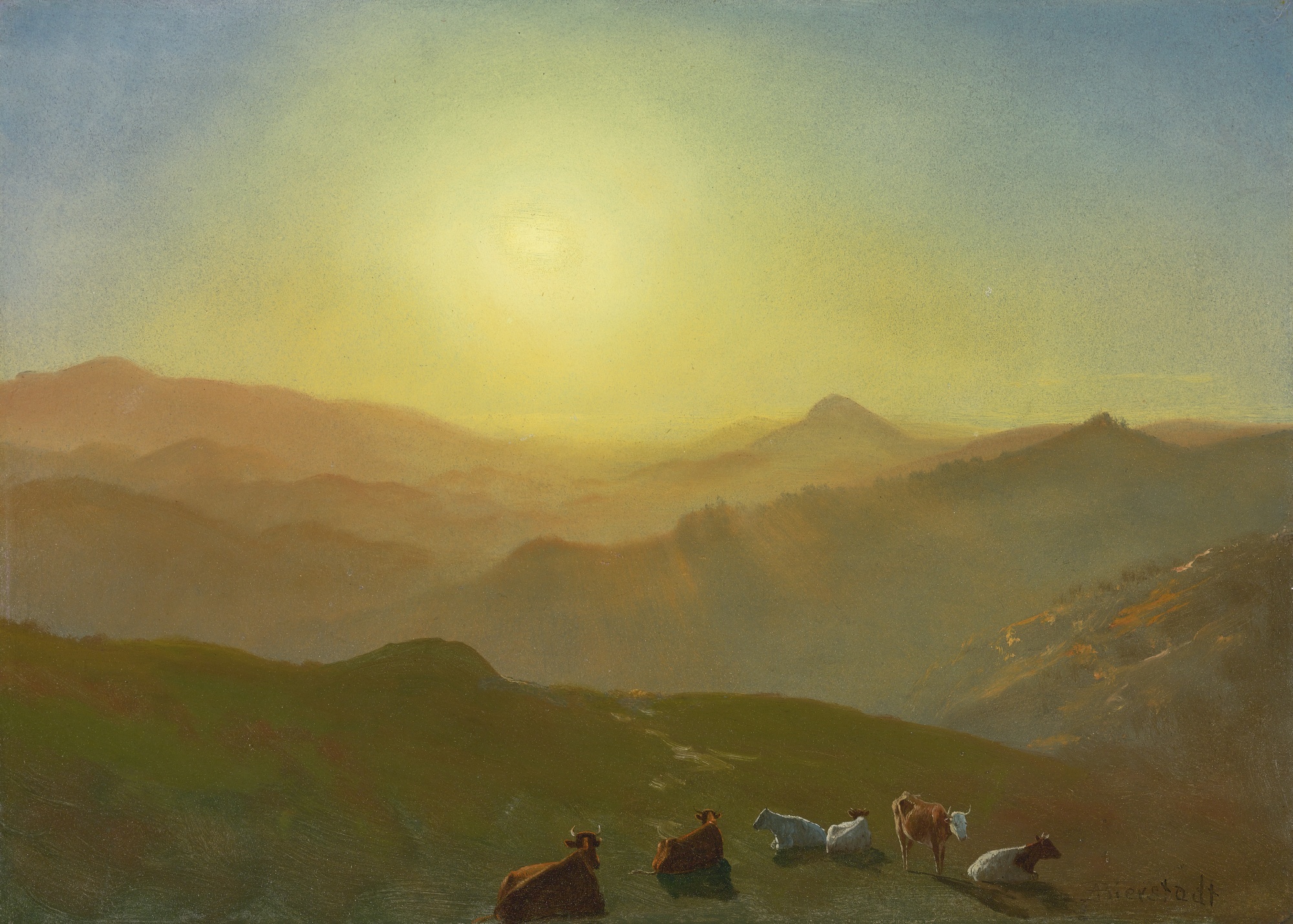
Why the Sky Is Blue and the Sunset Is Red
Sunlight looks white, but it is really a mix of many colors, like a rainbow. Each color travels as a wave, and each wave has a different length. Red light has a long wavelength, and blue light has a short one. When sunlight enters our atmosphere, the layer of gas around the Earth, it meets billions of tiny molecules of air. These molecules cannot stop the light, but they can change its direction. This process is called scattering, and it explains most of what we see when we look up at the sky.
Blue light scatters much more easily than red light because its wavelength is shorter. When sunlight hits an air molecule, the blue part bounces off in many directions, while the red part mostly continues straight ahead. Because blue light is scattered across the whole sky, it reaches our eyes from every direction, not just from the sun. That is why the sky looks blue on a clear day, even though we are not looking directly at the sun. Violet light actually has an even shorter wavelength than blue, but our eyes are less sensitive to it, and some of it is absorbed high in the atmosphere, so we see blue instead.
At sunset, the sun sits low on the horizon, so its light must pass through a much thicker layer of atmosphere before it reaches us. Along that longer path, almost all the blue light gets scattered away before it arrives. What is left is mostly red and orange light, which travels more easily through the thick air without being blocked. This is why sunsets glow with warm colors. Dust, smoke, or clouds in the air can scatter even more light and make the colors more dramatic, which is why sunsets after a dry, dusty day are often especially bright.
So the sky's color is really a story about distance and light. At midday, sunlight travels a short path through thin air, and blue wins. At sunset, light travels a long path through thick air, and red wins. Once you understand scattering, you can predict the sky: a clear afternoon will be bright blue, and a hazy evening will often turn a deep, fiery red.
Vocabulary
- wavelength
- the distance between the top of one light wave and the top of the next one, which helps decide what color the light is — Radio stations broadcast on different wavelengths, so you have to tune your radio to the right number to hear them clearly.
- scattering
- the way that light spreads out in many directions after it hits very small things — Sunlight passing through morning fog causes a soft scattering of light across the whole field.
- molecules
- the very small parts that make up everything around us, including air and water — Water molecules move faster and spread apart more when you heat the water up.
- atmosphere
- the layer of air that surrounds a planet like Earth — Astronauts must wear special suits because there is almost no atmosphere on the moon.
- horizon
- the line far in the distance where the sky seems to meet the land or the sea — We sat on the beach and watched the little boat disappear slowly over the horizon.
- absorbed
- to take in light, heat, or another kind of energy instead of letting it pass through or bounce away — The dark curtains absorbed most of the afternoon heat, keeping the room cooler than expected.
- bounces off
- to hit a surface and then move away from it in a different direction — In the game, the ball bounces off the wall and comes straight back toward the player.
- dramatic
- very strong, sudden, or powerful to look at or experience — There was a dramatic change in the weather just minutes before the storm arrived.
- hazy
- not clear, because of dust, smoke, or thin mist in the air — The mountains looked hazy in the distance because of the summer heat rising off the fields.
- fiery
- bright red or orange, in a way that looks like fire — The chef proudly served a fiery curry that made everyone at the table reach for water.