After Flight 12: What Starship Still Has to Prove
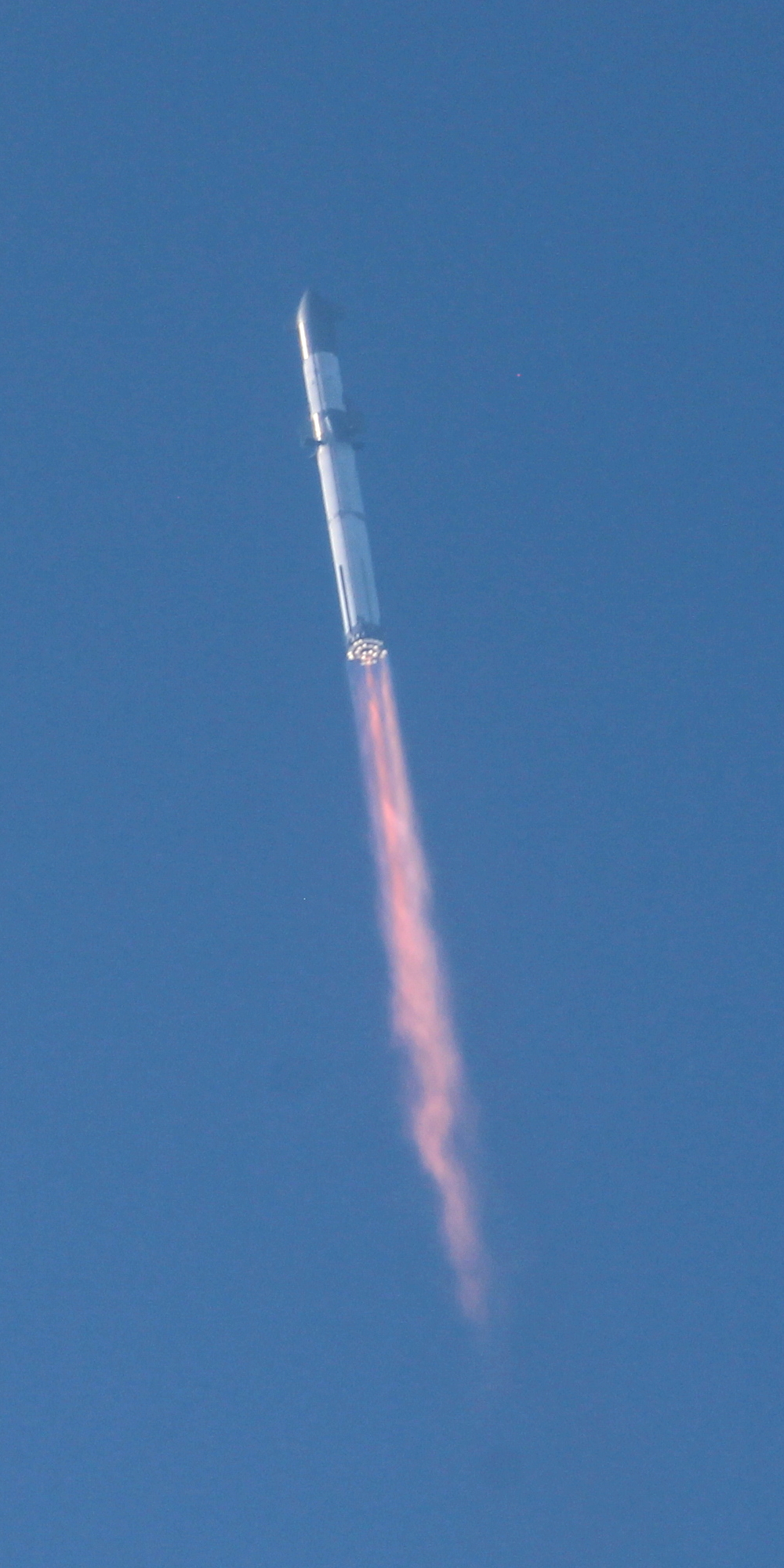
On May 22, 2026, SpaceX launched Starship on its twelfth test flight — the first to use the upgraded Version 3 design. The upper-stage Starship successfully deployed mock satellites and completed a controlled splashdown in the Indian Ocean, as planned. The Super Heavy booster was also targeted for a water splashdown in the Gulf of Mexico, but it failed to execute its landing burn and broke apart before reaching the planned impact zone. The mixed result captures where the programme stands: real progress on the vehicle itself, but unfinished work on the full system. The flight had originally been scheduled for May 21 before a scrub forced a one-day delay.
Starship Version 3 is a significant upgrade. It is designed to carry up to 100 metric tons of payload to low Earth orbit — well beyond what currently flying commercial heavy-lift rockets can manage — and its full reusability target means both the booster and the upper stage are meant to land and fly again quickly. That rapid turnaround is central to SpaceX's economics and to NASA's Artemis programme, which has contracted Starship as the Human Landing System. Under current NASA planning, Artemis III in late 2027 will test the lander in Earth orbit with a crew, while Artemis IV in 2028 is scheduled to be the first crewed Moon landing. But a single successful upper-stage splashdown is far from a cleared flight path to the Moon.
Several milestones remain. The most technically demanding is orbital refuelling. Starship cannot carry enough propellant to reach the Moon on a single launch, so multiple tanker Starships must rendezvous in low Earth orbit and transfer fuel before the crew vehicle departs. This has never been done at scale with cryogenic propellants. Separately, SpaceX has already demonstrated catch-arm recovery of Super Heavy — most recently on IFT-7 and IFT-8 — but Flight 12 deliberately skipped a catch attempt for this V3 debut. That recovery method must now be made consistent with the new V3 hardware, since rapid reuse depends on it. Beyond hardware, SpaceX must show that Starship can fly repeatedly without major failures — regulators and NASA will require a track record before certifying the vehicle for crewed missions. Engineers also need to qualify the life-support systems, test crew abort modes, and solve a specific lunar-surface challenge: the main Raptor engines must shut down before touchdown, with the vehicle switching to smaller mid-body thrusters for the final descent phase, in order to keep engine plumes from kicking up dust that can damage sensors and solar panels.
Flight 12 matters for another reason: SpaceX filed its IPO prospectus with the SEC on May 20, just two days before the launch, with shares expected to begin trading around June 12. Investors are watching each test closely as a signal of programme health. A lost booster is a setback, but the successful upper-stage performance gives the company data it needs. The road from a test splashdown in the Indian Ocean to a crewed landing on the Moon is long, and every remaining milestone — refuelling, booster recovery, crew certification — represents months or years of additional work. Flight 12 is a step forward, not a finish line.
Sources
- SpaceX Starship Flight 12 launch updates: Starship V3 Ship makes fiery splashdown in Indian Ocean as planned (Space.com)
- SpaceX Starship Successfully Lifts Off and Returns to Earth (Bloomberg)
- Launch preview: SpaceX tries again for first launch of its Starship Version 3 rocket (Spaceflight Now)
- SpaceX scrubs Starship V3 launch attempt (CNN)
- SpaceX scrubs test flight of massive Starship rocket, will retry Friday (CNBC)
- SpaceX prepares for critical launch of Starship ahead of IPO (NPR)
- スペースX 大型宇宙船の試験飛行成功 月や火星への飛行も想定 (NHK)
- Starship Propellant Transfer Demonstration (Wikipedia)
- Space Launch System (SLS) Block 1B Reference (NASA)
- NASA Scraps 2027 Moon Landing as Artemis III Becomes Earth-Orbit Test (Scientific American)
- Artemis III pushed to late 2027 with Earth-orbit lander test (Space.com)
- SpaceX catches Super Heavy booster on IFT-5 (SpaceNews)
- Starship HLS design: mid-body thrusters for lunar touchdown (AmericaSpace)
Vocabulary
- scrub
- a decision to cancel a planned rocket launch, usually at the last minute because of a technical problem or bad weather — The launch was scrubbed two hours before liftoff because of high winds.
- splashdown
- the landing of a spacecraft in the ocean at the end of a flight — The capsule completed a successful splashdown in the Pacific Ocean.
- reusability
- the quality of being able to be used again after a mission, rather than being thrown away — Full reusability is the key to making space travel much cheaper.
- rendezvous
- to meet at a planned place and time, used especially of spacecraft in orbit — The crew vehicle will rendezvous with the fuel tanker before heading to the Moon.
- cryogenic
- relating to gases that have been cooled to extremely low temperatures in order to store them as liquids — Liquid hydrogen is a cryogenic propellant stored at nearly minus 250 degrees Celsius.
- certifying
- officially confirming that something meets the required safety and performance standards — The agency spent two years certifying the new aircraft before it could carry passengers.
- thrusters
- small rocket engines used to make fine adjustments to a spacecraft's position or speed — The astronauts used thrusters to rotate the capsule before re-entry.
- prospectus
- an official document a company publishes when it offers shares for sale to the public for the first time, containing key financial and business information — Investors studied the prospectus carefully before deciding whether to buy shares.