Beijing's Busy Week: Trump, Xi, and Putin on the World Stage
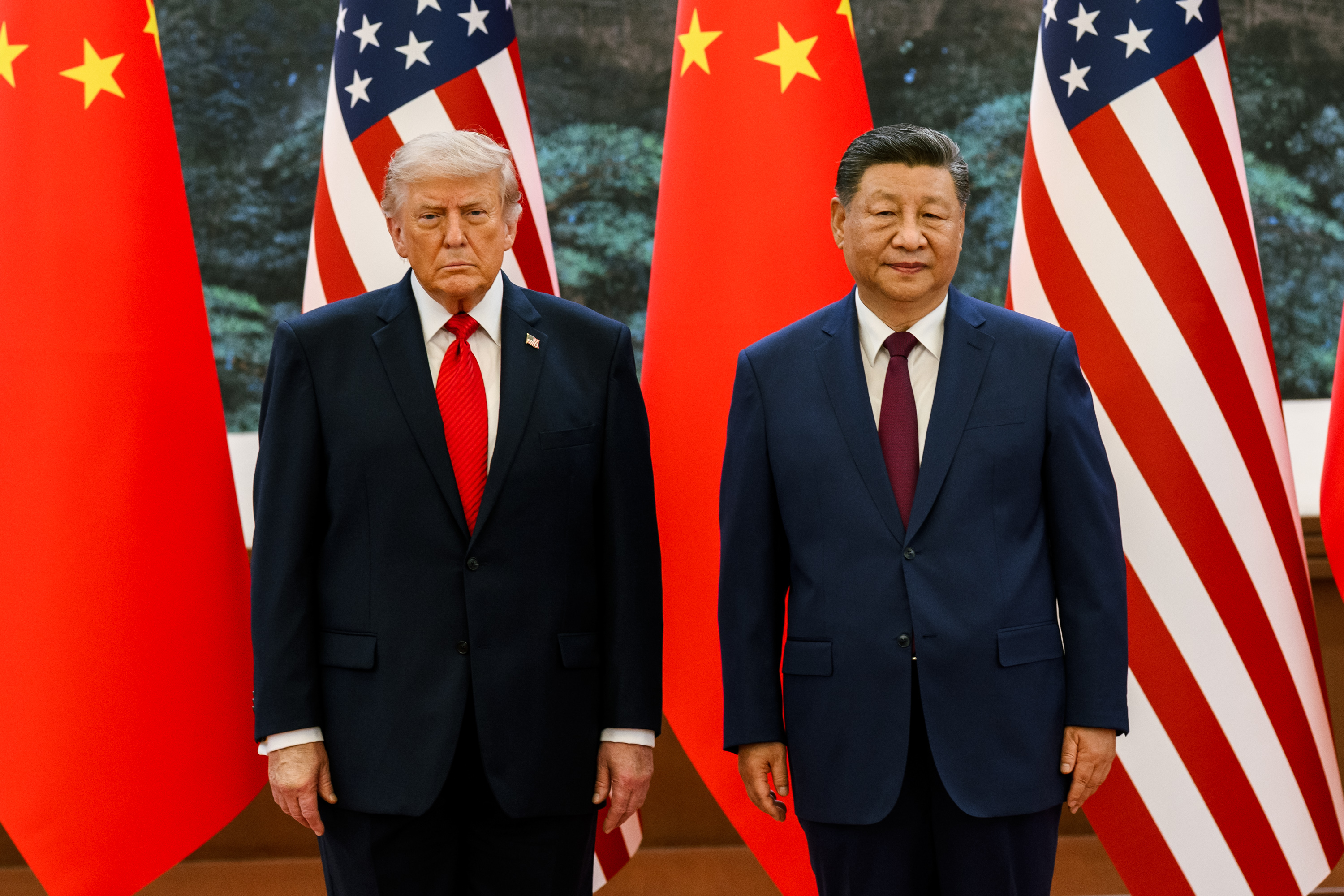
When US President Donald Trump arrived in Beijing on the evening of 13 May for a three-day state visit with Chinese President Xi Jinping, investors around the world held their breath. The two leaders of the world's largest economies had not met face-to-face in months, and expectations were high. Both sides praised the talks warmly — Trump boasted of 'fantastic trade deals', and Beijing called the meeting a step toward 'strategic stability'. Yet when the details emerged, the concrete outcomes were thin. China agreed to purchase 200 Boeing aircraft — far fewer than the roughly 500 aircraft analysts had expected — and the two sides established new trade and investment councils. On the most sensitive issues, Taiwan and Iran, they offered sharply different accounts of what had actually been agreed.
The gap between the summit's rhetoric and its results unsettled financial markets. On 15 May, the Dow Jones Industrial Average fell roughly 537 points, dropping back below 50,000 — a level it had only crossed for the first time since February the day before. The S&P 500 slid 1.24% and the Nasdaq fell 1.54%, as technology stocks retreated sharply. Analysts noted that investors had priced in optimism ahead of the summit; when no major policy breakthroughs materialised, that optimism unwound quickly. Rising US Treasury yields added to the pressure, signalling that traders were also worried about longer-term economic uncertainty. Boeing shares, ironically, fell nearly 4% on the day, as the aircraft order fell short of market hopes.
The timing of Putin's planned visit made the diplomatic picture even more complex. The Kremlin confirmed on 16 May that the Russian president would travel to Beijing on 19 and 20 May — just days after Trump had left the Chinese capital. The two-day trip, timed to mark the 25th anniversary of the Russia-China Treaty of Good-Neighbourliness, underscores how closely the two countries have aligned since Russia's invasion of Ukraine in 2022. China has officially presented itself as a neutral mediator in that conflict, yet it has continued to buy Russian oil and goods, providing Moscow with economic relief that Western sanctions were designed to remove.
The back-to-back visits put Xi in an unusual diplomatic position: hosting Washington and Moscow within the same week, signalling that Beijing intends to keep its channels open to both superpowers regardless of how tensions between them evolve. For English learners following global affairs, this sequence of events is a useful reminder that diplomacy rarely produces the clean 'wins' that leaders claim in public statements. Markets, which process expectations rather than words, were quicker to judge: when the gap between promise and delivery became clear, the reaction was swift.
Sources
- Putin to Visit China May 19-20 for Talks With Xi, Kremlin Says - Bloomberg
- Russia's Putin to meet China's Xi in Beijing from May 19-20, Beijing and Moscow say
- Russia's Putin to visit China following Trump's trip | Al Jazeera
- Trump returns to Washington after leaving Beijing summit with few clear wins
- Trump-Xi summit: China, US disagree on what they agreed on | Al Jazeera
- Stock market news for May 15, 2026 - CNBC
- Stock market today: Dow, S&P 500, Nasdaq sink as bond yields jump
- Xi warns Trump: Mishandling Taiwan will put U.S.-China relationship in 'great jeopardy'
- Vladimir Putin to visit China, Kremlin says, as Xi calls for 'grand plan' to strengthen ties
Vocabulary
- concrete
- real and specific, not just ideas or words — The report called for concrete steps to reduce pollution, not just general goals.
- rhetoric
- language that sounds impressive but may not reflect what will actually happen — The candidate's speech was full of rhetoric about change, but she offered few specific plans.
- materialised
- to actually happen after being expected or planned — The predicted rise in sales never materialised, and the company lost money that quarter.
- priced in
- to have already included an expected event or piece of news in the current price of stocks or other assets — Traders had already priced in the interest rate cut, so the announcement had little effect on the market.
- sanctions
- official rules that stop one country from trading with or helping another country, used as a punishment — The international community imposed sanctions on the government after it violated the ceasefire agreement.
- mediator
- a person or country that helps two sides who disagree to reach an agreement — The United Nations sent a mediator to help both sides negotiate a peace deal.
- unwound
- to gradually disappear or come apart after building up — The tension that had built up over months unwound quickly once the two leaders agreed to talk.
- underscores
- to show clearly that something is important or true — The accident underscores the need for stricter safety rules in the industry.