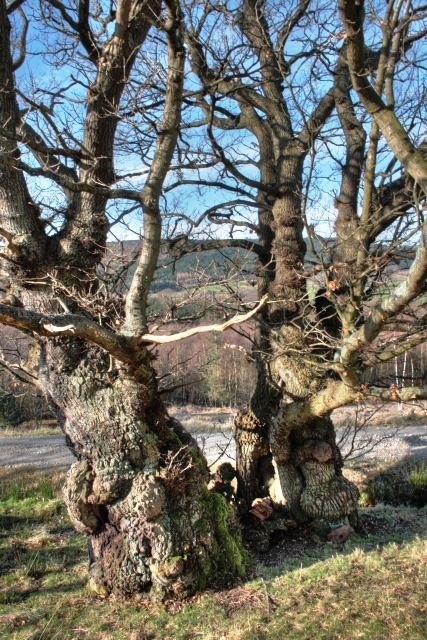
The Memory of Trees
If you slice a tree in half, the rings tell a story. Wide rings mean a wet year with plenty of growth. Narrow rings mean a dry one, or a cold one, or a year when the tree had to share water with too many neighbours. Dark bands mean fire. Pale bands mean frost. A careful reader can walk back through a century of weather in a single cross-section, and the tree will not have lied once.
This is the basic claim of dendrochronology—the science of reading tree rings as a record. It sounds modest, but the consequences are strange. A bristlecone pine in California has rings going back nearly five thousand years; by cross-referencing living trees with ancient wood found in old buildings, researchers have built an unbroken weather record stretching back deeper than most written histories.
What interests me more than the data is what the data implies about memory. Trees do not remember as we do. They have no brain, no story of themselves, no sense of a year being particularly hard. And yet their bodies keep the record anyway—accurately, patiently, without any need to be interpreted at the time. The fire of 1783 is in the rings whether or not anyone ever reads them.
There is something consoling in this. Much of what matters to a life—the droughts, the good years, the moments when growth slowed—need not be consciously remembered to be faithfully preserved. The body, like the tree, keeps its own quiet account.
Vocabulary
- dendrochronology
- The scientific study of dating events and environmental changes by analysing tree rings. — Dendrochronology helped the team date the medieval roof beams.
- bristlecone pine
- A long-lived species of pine tree found in the western United States; some individuals are over four thousand years old. — The bristlecone pine is one of the oldest living organisms on earth.
- cross-referencing
- Comparing two or more sources against each other to check or combine information. — The editor confirmed the date by cross-referencing three archives.